

Here is the short answer: kinesiology tape may ease pain and improve function a little, for a short time. The evidence stays uncertain, and results vary from person to person.
You see this tape everywhere — on runners, in clinics, on store shelves. That popularity makes the science worth a close look.
Does it beat a placebo? What does the latest research show? Is it worth your money? A BMJ Evidence-Based Medicine analysis of 128 reviews and 310 trials, with over 15,000 participants, found only modest short-term effects.
This read stays balanced. You will get no hype in either direction. Judge the tape by your own response.
Kinesiology tape may ease pain and improve movement for a short time, but the evidence is uncertain.
Use tape as a helper alongside exercise and rehab, not as a cure on its own.
The placebo effect is real relief, so don't pay extra for fancy claims.
Test the tape for a few days and stop if you see no change or get skin irritation.
Apply tape safely: start with clean, dry skin and patch-test if you have sensitive skin.
The most widely cited explanation is the decompression theory, according to Physiotattva. When you apply the tape with a slight stretch, its elastic properties gently lift the skin and the superficial fascia away from the underlying muscle. This action creates a microscopic space. Supporters say that space reduces pressure on pain receptors and allows fluid to move more freely.
A related idea describes a pressure gradient. The lifting action may create a difference in pressure between the superficial tissues and the dermis, which could increase local circulation, as noted in the International Journal of Sports Physical Therapy. Researchers have never demonstrated this concept empirically. The journal describes it as a proposed mechanism, not a proven one.
You should also know one design fact. Makers build the tape to mimic skin elasticity. This feature lets you keep full range of motion while wearing it. That is a design choice, not evidence that the tape changes your tissue.
A second group of claims focuses on blood flow and body awareness. The International Journal of Sports Physical Therapy reports that lifting the skin may improve cutaneous circulation and lymphatic flow. The same lifting action may reduce localized mechanical pressure. Another proposed pathway involves sensory input. Continuous feedback from the tape may enhance proprioception, which is your sense of joint position. This could matter for injuries involving instability, such as the ankle.
Some products go further. Certain brands infuse minerals into the tape and claim these fibers reflect the body's infrared radiation back toward the skin. The theory holds that this raises local skin temperature and boosts vascular flow. The journal notes that these mechanisms may differ from one brand to the next.
Here is the honest summary. Multiple factors may contribute at once. The precise mechanisms behind kinesiology tape remain unclear, and the physiological theory stays debated. Treat every mechanism above as proposed, not established.
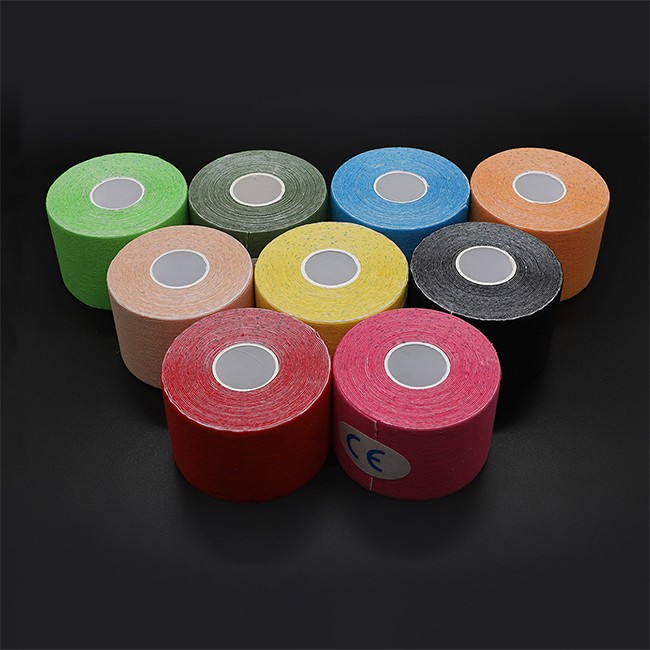
The largest evidence summary to date comes from BMJ Evidence-Based Medicine, reported in a BMJ Group press release dated 31 March 2026. Researchers assessed 128 systematic reviews covering 310 randomized trials, 15,812 participants and 29 musculoskeletal conditions. Most reviews focused on lower extremity conditions (45%) and pain intensity (89%).
The pooled results show a possible benefit for pain right after application. Immediate pain reduction reached a Hedges' g of -0.69, with a 95% confidence interval of -0.81 to -0.57. Short-term pain reduction reached -0.57. Immediate function and disability scores reached -0.54. These estimates may reach the predefined minimal clinically important difference of 0.5 standard deviations, according to the PubMed record of the review.
The picture darkens beyond that window. The same review found little or no effect on medium-term pain, short- and medium-term function, muscle strength, range of motion, or disease-specific symptoms. The authors concluded that current evidence is very uncertain regarding the clinical effects of KT on musculoskeletal disorders. The tape may also be only marginally better than placebo taping, with low certainty.
Quality is the core problem. The BMJ review rated 78% of the included systematic reviews as critically low in methodological quality. Only 19 trials reported side effects. Skin irritation (40%) and itching (30%) were most common, and both generally resolved without treatment.
"The press release is reasonably faithful to the article in highlighting that the effect may be immediate or short-term, that the evidence is uncertain, and that skin irritation and itching are possible adverse effects," the Science Media Centre noted in its expert reaction.
The Science Media Centre also stressed one nuance. The study does not completely rule out possible specific benefits.
Newer research points the same direction. A 2026 study from Michigan State University Healthcare reports that KT tape may offer small, short-term benefits, such as slight pain relief and improved movement right after application. The same study suggests it may not be effective for long-term pain relief or injury recovery.
A 2021 review pooled roughly two dozen randomized trials with about a thousand participants. The authors judged the certainty of the evidence low to very low across every comparison. Against sham taping, they could not tell whether tape improved pain, function or range of motion. Against exercise alone, adding tape may make little or no difference. A few trials suggested slightly better pain scores at one to two weeks, but the effects were small and inconsistent.
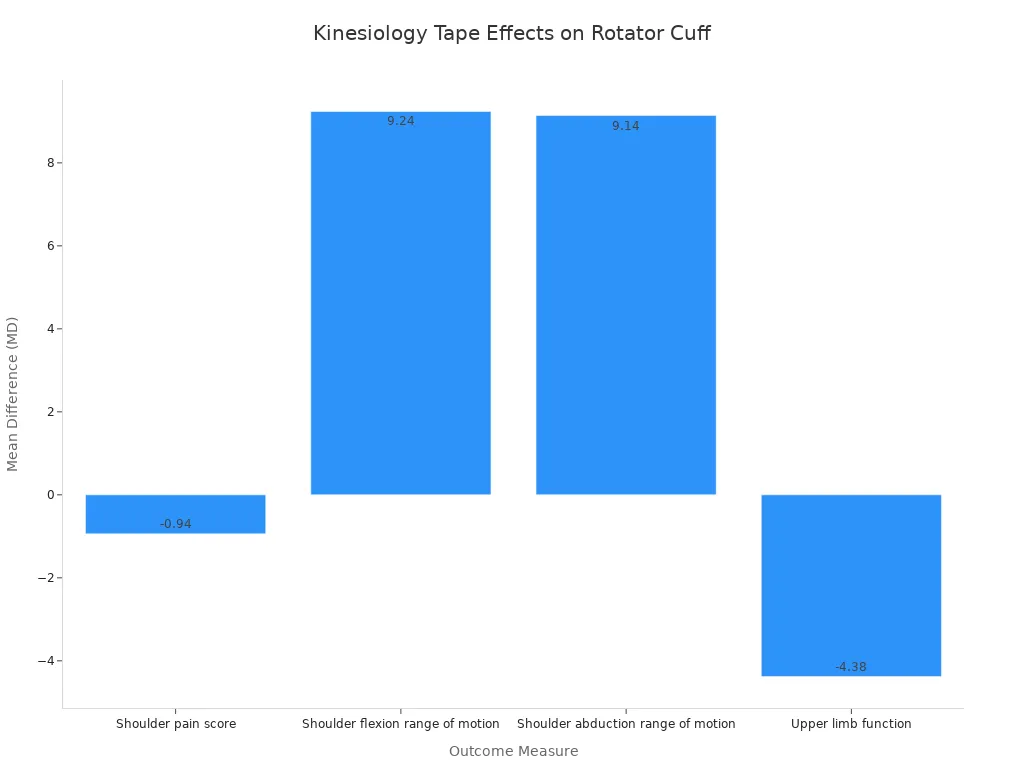
Specific conditions remain contested. A meta-analysis of 17 studies with 959 participants, published in PMC, found that kinesiology tape significantly reduced shoulder pain and upper limb dysfunction in rotator cuff injuries. The authors caution that potential risk factors mean you should interpret the therapeutic effect with caution.
Some proponents claim tape helps chronic musculoskeletal pain beyond four weeks. Treat that claim as contested, not settled. The BMJ overview found inconclusive evidence at medium-term follow-up, and a 2021 Cochrane review of shoulder trials rated the evidence low to very low certainty.
The honest takeaway: any benefit you feel will likely be small and concentrated in the first few hours or days. Do not expect the tape to fix a structural problem.
Pain is not a simple signal from damaged tissue. Your brain weighs many inputs, including your expectations. That fact makes the placebo question central to any honest look at kinesiology tape.
Research comparing real tape with sham tape helps here. A study in PMC compared tape against placebo taping over a 48–72 h period. The two groups showed no significant differences in pain, fear of movement, knee strength, or proprioceptive force sense. Effect sizes were small. The authors concluded that tape does not appear to provide substantial short-term benefits beyond placebo taping.
That result does not mean the tape does nothing. It means several non-specific effects may explain much of what users feel:
Cutaneous sensory stimulation from the adhesive and fabric
Increased body awareness while the tape sits on the skin
Positive expectancy, or simply believing the treatment will help
Taping without tension can still provide afferent input, per the same PMC study. That input may shape proprioceptive feedback and perceived function, especially over short exposures. A second PMC paper adds that patients may experience benefits through the placebo method as well. Its authors note that their design could not separate specific effects from non-specific ones tied to skin occlusion.
Here is the practical lesson. A placebo response is real relief, not a trick. You just should not pay premium prices expecting a unique physiological miracle.
The strongest evidence places tape beside other treatments, never in place of them. A 2025 systematic review and meta-analysis of 54 randomized controlled trials, cited by Miss Chiropractic, found potential short-term benefits for people with low back pain. Another meta-analysis found improvements in pain and disability when clinicians used the tape as an adjunct to other treatments for musculoskeletal disorders.
The Canadian Health Academy frames the same point plainly. The most supportive evidence positions taping alongside exercise and manual therapy. The research does not show that it outperforms sham taping or other interventions across the board.
Spidertech, a tape brand, agrees in its clinician guidance. Tape is a useful adjunct for short-term pain modulation, proprioceptive support, and functional facilitation in specific contexts. It is not a structural realignment tool, a magic strength booster, or a replacement for exercise and manual therapy. No high-quality evidence shows tape is inherently superior to manual therapy, therapeutic exercise, or structured rehabilitation.
So treat tape as a supporting player. Use it to enhance other interventions, not to substitute for them. Exercise and manual therapies carry stronger long-term evidence for most musculoskeletal conditions. Tape may add a small short-term edge when you combine it with those therapies. It will not cure the underlying problem on its own.
You may find a short trial worthwhile if you want brief support during activity. The evidence points to specific contexts. Spidertech describes tape as a useful adjunct when you apply it purposefully and transparently, with support for short-term pain modulation, proprioceptive support, and functional facilitation, especially alongside exercise.
Certain conditions appear in the cited reviews. These include shin splints, forward head posture, patellofemoral pain syndrome, chronic nonspecific low back pain, ankle balance, and rotator cuff injuries. Tape might also help with short-term swelling in specific cases, such as post-operative facial edema or some lower-limb cases. Those effects vary, and you should pair tape with standard lymphatic techniques like compression and manual drainage.
Keep your expectations modest. A Powers Health report quotes the research team behind the major review:
"Current evidence is very uncertain regarding the clinical effects of kinesio taping on musculoskeletal disorders across all follow-ups," concluded the research team led by Dr. Xiaoyan Zheng of the Southern Medical University School of Rehabilitation Sciences in Guangzhou, China.
You should stop and reassess if you notice no change within the first few days. The research places any benefit in the immediate and short-term window. A lack of early response tells you something useful.
Watch for these signals that tape is not the right tool for you:
Pain or stiffness that stays the same or worsens after application
Skin irritation, itching, or redness under the tape
A sense that you rely on the tape to move safely
No functional gain during the activities you care about
Chronic low back pain offers a cautionary example. A meta-analysis of 11 randomized trials found inconsistent results with tape alone. Multi-modal care, including exercise, education, and manual therapy, remains the backbone of effective treatment, according to Spidertech. Use kinesiology tape to enhance other interventions, not to replace them.
Start with clean, dry skin. Oils, lotions, or sweat can stop the adhesive from bonding, and the tape may peel early, according to the National Federation of Professional Trainers. Round the corners before you stick the tape down. Rounded edges resist rolling and lifting during movement.
You can apply kinesiology tape yourself, but professional application ensures correct tension, direction, and placement for maximum results, according to The Spine and Health Center. Follow the package guidance for stretch limits. Avoid overstretching the tape, because too much tension can compress tissue and restrict blood flow.
Operson Kinesiology Tape offers features that matter for comfort and wear time. It is made from at least 93% cotton with elastic spandex, and it is latex-free. The hypoallergenic adhesive suits sensitive skin. The tape is also waterproof, sweat-resistant, and breathable, so it holds up through workouts and showers.
After application, give the adhesive time to bond. The National Federation of Professional Trainers advises avoiding showers, swimming, or heavy sweating for 30 to 60 minutes.
Patch-test sensitive skin first. Apply a small strip in an unobtrusive area and check for redness, itching, or discomfort. A clinical study of kinesiology tape in arm lymphedema, cited by Level Up PT, showed a 4.2% rate of skin peeling and redness with no serious skin events in properly screened patients.
Never apply tape to open wounds, cuts, rashes, or infected areas. Tape can trap bacteria and worsen the problem. Avoid the tape if you have an active infection, a blood clot, or an allergy to acrylic adhesive. Older adults with thinner skin face higher irritation risk, according to NBC News, so consult a clinician first.
Remove the tape slowly, in the direction of hair growth. Pulling too fast can irritate skin or cause tiny abrasions. Warm water or lotion can ease removal. Stop use right away if irritation occurs.
Exercise and rehabilitation carry the strongest evidence for lasting improvement. Physical therapy looks at why a problem started. It checks strength gaps, movement mechanics, load tolerance, and your daily activity demands, according to Seattle Rehab PT. Tape cannot do that work. It sits on the skin for a short time and then comes off.
Your body needs time to adapt. Strength gains, tendon remodeling, and motor control improvements do not happen overnight, Seattle Rehab PT notes. General time frames give you a realistic picture:
Acute injuries: noticeable improvement within 2 to 4 weeks
Chronic pain or long-standing issues: 6 to 12 or more weeks
Post-surgical rehab: varies by procedure, often several months
Hands-on therapy paired with active rehabilitation restores mobility and builds a foundation for long-term function, according to Synergy Physical Therapy. The PEACE & LOVE protocol follows the same logic. It starts with protection and education, then moves to load, optimism, vascularization, and exercise. Movement is the engine. Tape is not.
Tape fits best as a short-term helper during activity. The Physical Therapy Institute describes four practical roles. A therapist can apply tape along a weak muscle group to guide movement during early rehab. Fan-shaped strips may ease post-surgical swelling. Tape applied before a set of exercises may reduce soreness and let you finish more reps with better form. It may also dull pain signals so you stay active without medication.
The key word is alongside. The ITNYC Physical Therapy clinic stresses that kinesiology tape works as one part of a broader plan that includes exercise, movement training, and education, not as a standalone treatment. A trained professional checks your movement, symptoms, and strength first. Tape direction, stretch, and anchor points all matter. Too much stretch can irritate skin or fail to support the issue.
Think of the split this way. Use tape for short-term support or confidence during activity. Use exercise for durable gains. Neither option replaces the other, and tape stays a low-risk adjunct when you apply it well.
Kinesiology tape is not a stand-alone treatment. It can be a low-risk adjunct for short-term relief, and that is the honest verdict. Exercise and rehabilitation remain the foundation of recovery. Tape plays at most a supporting role.
Here is the practical bottom line. Try it if you are curious. Judge it by your own short-term response, not by marketing claims. Do not expect lasting effects.
You can make evidence-informed choices without overspending or over-relying on gadgets. Ask what the research shows. Test the tape for a few days. Keep what helps, drop what does not, and put your effort into movement that builds lasting strength.
Most people wear it for a few days at a time. The tape's benefits, if any, show up in the first hours or days. Remove it sooner if the edges lift, the adhesive weakens, or your skin starts to itch. Give your skin a rest between applications.
Yes, if the tape is waterproof. Operson Kinesiology Tape is waterproof, sweat-resistant, and breathable, so it holds up through showers and workouts. Wait 30 to 60 minutes after application before you get it wet. That window lets the adhesive bond fully to dry skin.
The research cannot say for sure. One study found no significant differences between real tape and sham tape for pain, strength, or proprioception. The BMJ review rated the tape's edge over placebo taping as low certainty. Expect small effects at best, and treat relief as real either way.
Test it during the activities you care about. Note your pain and movement right after application, then again a day or two later. If nothing changes, the tape is not earning its place. Stop using it and put your effort into exercise and rehab instead.
Yes, though reactions are usually mild. The BMJ review found skin irritation in about 40% of reported side effects and itching in about 30%, and both generally cleared up without treatment. Patch-test a small strip first. Never apply tape over open wounds, rashes, or infected skin.

Whatsapp: +86-13506126583
E-mail: davylee@operson.cn
tommy@operson.cn
ADD: No. 1 Qingyun Road, Niutang Town, Wujin District, Changzhou City, Jiangsu Province, China


