

You open your medicine cabinet. A dozen plasters stare back. Which one do you pick for that small cut on your finger? The confusion is common.
The right choice depends on four quick factors. You need to know the wound type, wound size, wound location, and special needs like allergies or waterproofing. A correct first aid plaster matches these factors perfectly. This guide gives you a simple step-by-step method. You will decide in under a minute. No more guessing.
Assess the wound type, size, depth, and drainage before selecting a plaster.
Choose between standard, fabric, and waterproof plasters based on your activity and wound location.
Match the plaster to wound specifics: sterile adhesive for cuts, hydrocolloid for blisters, hypoallergenic for sensitive skin.
Apply the plaster on clean, dry skin and change it daily or when it becomes dirty or wet.
Look at the wound before you reach for a plaster. A small cut, a scrape, a blister, and a minor burn each need a different cover. Size matters too. A plaster works well on a wound smaller than the pad itself. Depth changes everything. A shallow graze sits on the surface. A deep cut may need stitches or a medical visit.
Exudate level also guides your choice. A dry wound needs little absorbency. A wound with low exudate produces a small amount of clear fluid. High exudate means steady drainage, and a standard plaster will soak through fast. Choose a plaster with a larger absorbent pad for wetter wounds.
Sometimes a plaster is not enough. Large or deep wounds, wounds with heavy bleeding, or wounds with jagged edges need advanced dressings or professional care. A standard adhesive strip cannot close a gaping cut or stop serious bleeding.
Check the wound for infection signs before you cover it. Minor wounds improve after day one or two. Redness and swelling fade. Pain eases. Drainage stays clear or slightly yellow and small in amount.
An infected wound moves the other way. Use this table to compare the two.
Indicator | Minor Wound (Normal Healing) | Wound Requiring Medical Care (Infection) |
|---|---|---|
Redness & swelling | Mild, improves after day 1–2 | Increasing or rapidly spreading |
Warmth | Slight, temporary | Warm to touch, worsening |
Pain | Eases over time | Increases after day 2–3 |
Drainage | Clear or slightly yellow, small amount | Pus, cloudy, green, or foul-smelling |
Odor | Minimal | Bad or putrid smell |
Fever | Absent | Present (systemic response) |
Healing trajectory | Steady improvement | Worsens after day 2–3 |
Emergency red flags | None | Red streaks, gray/black/numb skin, high fever with chills or confusion |
A fever above 100.4°F with a wound suggests the infection has moved beyond the wound site. Chills, fatigue, a rapid heartbeat, or confusion make this more serious. A foul odor that persists after cleaning points to bacterial contamination. Delayed healing is another warning. Minor wounds show clear progress within one to two weeks. An infected wound stalls or worsens, and its edges may separate instead of closing. These signs mean you need medical attention, not just a plaster.
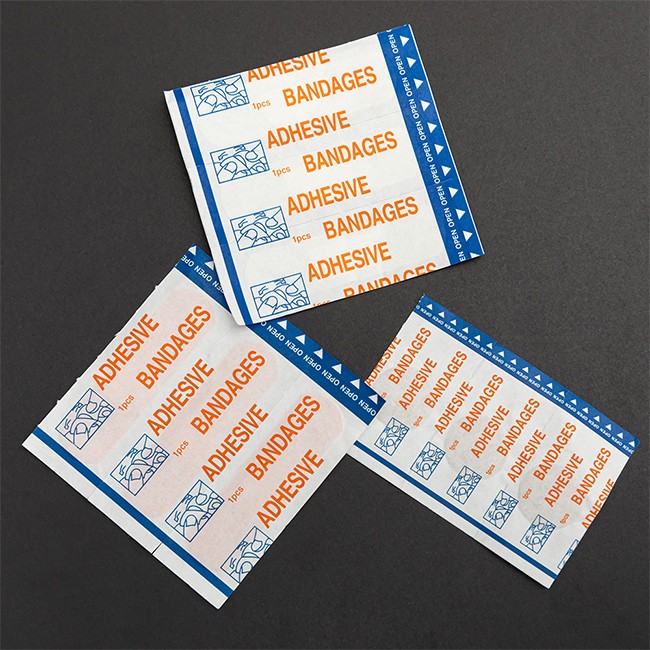
You walk down the pharmacy aisle and see three main plaster families. Each one serves a different purpose. A standard adhesive strip works best for minor cuts and grazes. It offers basic coverage at a low cost. A fabric plaster bends with your skin. You can wear one on a knuckle or elbow without it peeling off. A waterproof plaster seals out water, dirt, and germs. You can shower or swim without changing it.
The table below shows how these three types compare on breathability and moisture handling.
Plaster Type | Breathability | Moisture Management |
|---|---|---|
Fabric | Highly breathable; allows air circulation and conforms to skin | Absorbs water and weakens when wet; not water-resistant |
Plastic / Waterproof | Less breathable; blocks airflow | Waterproof barrier keeps water, dirt, and germs out, but can trap moisture against the skin |
Standard Adhesive | Not specifically detailed beyond general adhesive properties | Not specifically detailed; no dedicated moisture management data provided |
Waterproof plasters use a thin transparent film. This material shields the wound from water and dirt. It also allows some air circulation for healing. The adhesive holds securely during swimming, showering, and sports.
An antibacterial first aid plaster contains agents that reduce infection risk. Choose one when the wound sits in a dirty area or when you cannot clean it right away. A blister plaster uses a thicker cushion to relieve friction. It works well on heels and toes during long walks or runs. A sensitive-skin plaster uses a hypoallergenic adhesive. This option suits people with latex allergies or fragile skin.
Plasters come in many shapes and sizes. You can find round spots, narrow strips, and large rectangular pads. Some plasters let you cut them to size for a custom fit. A smaller piece works well on a fingertip. A larger piece covers a broad scrape on your knee.
Operson's Medical Tape & First Aid Plaster line covers all these needs. The range includes first aid plasters, zinc oxide plaster, nonwoven medical tape, PE tape, sports tape, kinesiology tape, silk tape, and acne patches. Every product uses skin-friendly, hypoallergenic adhesives. The company manufactures under ISO 13485 quality systems with EO sterilization. Operson also offers waterproof plasters and options infused with aloe vera or honey. As an OEM partner, Operson provides full customization. You can choose size, shape, packaging, logos, and even children's cartoon patterns.
Fabric plasters use a soft, lightweight nonwoven backing. This material conforms to body contours and promotes airflow. The low-lint surface prevents fiber residue in the wound. A hypoallergenic medical-grade acrylic adhesive holds firmly but removes without pain. This design minimizes friction during prolonged wear. It suits sensitive skin, pediatric care, and elderly patients.
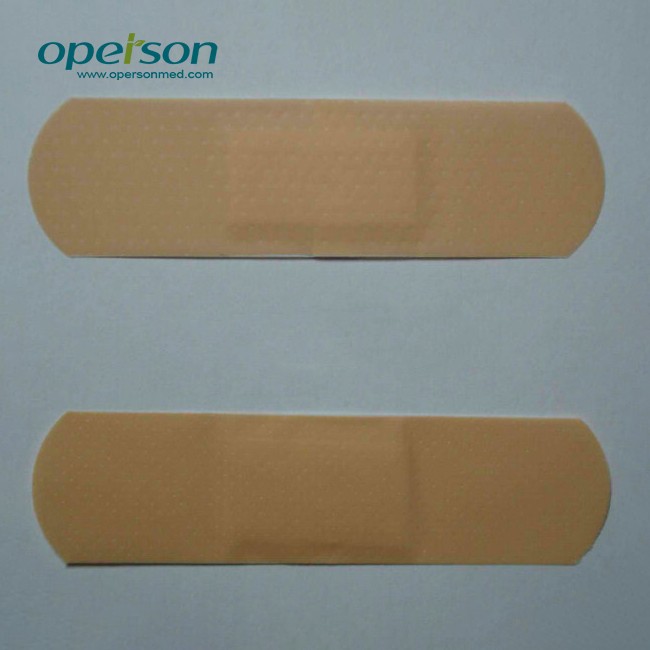
A minor cut or graze needs a sterile adhesive plaster strip. This simple cover protects the wound from dirt and bacteria. It also keeps the wound bed moist, which supports faster healing.
Pad size matters more than most people think. The absorbent pad should fully cover the injury. The adhesive border should stick only to healthy skin. A pad that sits partly on the wound edge will not seal properly. Choose a plaster with a pad slightly larger than the wound itself.
For superficial cuts with light drainage, a non-adherent pad works well. These pads come in several sizes, including 5 cm × 5 cm, 7.5 cm × 10 cm, and 10 cm × 20 cm. They absorb exudate directly through an internal core. Their design prioritizes fluid management over moisture retention. For wounds where moisture retention matters more, paraffin gauze serves as the preferred contact layer. You pair it with an absorbent secondary pad.
For superficial wounds where moisture retention is a priority, paraffin gauze serves as the preferred contact layer, paired with an absorbent secondary pad. Non-adherent pads are recommended for minor lacerations and abrasions with moderate drainage, though their design prioritizes fluid management over moisture retention.
Blisters need special attention. A small intact blister under 1 cm responds well to a hydrocolloid dressing. A large or painful blister over 1 cm needs careful draining, then coverage with a hydrocolloid or non-stick sterile dressing. A torn blister with the roof gone should never get an adhesive bandage. Use a non-stick dressing instead. For prevention in blister-prone areas, prophylactic taping with Leukotape P or Fixomull stretch tape helps. On multi-day hikes, carry a blister kit with hydrocolloid dressings, Leukotape, and sterile needles.
Blister Condition / Use Case | Recommended Plaster / Dressing |
|---|---|
Small intact blister (<1 cm) | Hydrocolloid dressing |
Large or painful blister (>1 cm) | Drain carefully, then cover with hydrocolloid or non-stick sterile dressing |
Torn blister (roof torn) | Non-stick dressing – avoid adhesive bandages |
Prevention in blister-prone areas | Prophylactic taping with Leukotape P or Fixomull stretch tape |
Multi-day hiking | Carry blister kit with hydrocolloid dressings, Leukotape, sterile needles |
Joints and areas prone to movement need flexible or elastic plasters. A narrow elastic shape fits a finger well. A broader plaster covers a flat area like the forearm. This first aid plaster bends with your skin instead of peeling off.
Sensitive skin and latex allergy require hypoallergenic, latex-free plasters. PVA-based adhesives contain no natural rubber latex. The North American Contact Dermatitis Group data shows PVA is not a recognized contact allergen, with no clinically relevant sensitization in over 4,000 screened patients. This makes hypoallergenic adhesives a safe choice for reactive skin.
Clean the wound with mild soap and water. Pat the surrounding skin dry. A dry surface helps the adhesive stick. Center the absorbent pad directly over the wound. Press the adhesive border onto healthy skin, not on the wound itself. Hold it there for a few seconds. Body heat helps the adhesive bond.
Wound healing needs the right moisture balance. A wound that stays too wet can macerate the skin. A wound that dries out heals more slowly. Choose a first aid plaster with breathability that matches the wound. The table below shows water vapor transmission rates for a dressing designed for optimal moisture control.
Dressing Sample | Water Vapor Transmission Rate (g·m⁻²·day⁻¹) |
|---|---|
Gf-0 | 2045.1 ± 47.8 |
Gf-C | 2155.1 ± 48.6 |
Gf-R | 2063.6 ± 34.9 |
Gf-CR | 2003.3 ± 111.5 |
Ideal range for wound dressings | 2000–2500 |
All these values fall within the ideal range. This range confirms the dressing provides an optimal moist yet ventilated microenvironment. It prevents exudate accumulation and infection while minimizing dehydration.
This design minimizes maceration while maintaining a moist, bioactive environment favorable for tissue regeneration... markedly reduce infection and inflammation, thereby accelerating wound closure and promoting new tissue formation.
Replace the plaster when it gets dirty, wet, or loses its adhesive hold. A loose edge lets dirt and bacteria reach the wound. Change the plaster daily for routine wounds. Change it sooner if drainage soaks the pad. For routine wound care, wound dressing plasters are generally more efficient and safer than gauze. Gauze works better for complex wounds that need frequent inspection.
Watch the wound each time you change the plaster. Normal healing shows steady progress. Increasing redness, swelling, or pain means you need medical attention. A plaster protects the wound and supports faster healing. The right absorbency keeps the wound bed moist without drowning it.
You now have a simple path. Assess the wound, pick the plaster type, match the size and material, then apply and monitor. This routine takes under a minute.
The right first aid plaster protects the wound, prevents infection, and supports faster healing. Keep a small variety on hand. Standard, waterproof, and sensitive-skin plasters cover most minor wounds. You are ready for everyday cuts, grazes, and blisters.
Most everyday wounds are easy to manage at home. With the right plaster, you can handle them with confidence.
Yes, you can trim many plasters to size. Cut only the adhesive border, not the absorbent pad. The pad must still fully cover the wound. A correct fit keeps dirt and bacteria out.
Change it daily for routine wounds. Replace it sooner if it gets dirty, wet, or loses its hold. A loose plaster lets bacteria reach the wound. Check the wound each time you change it.
Waterproof plasters block water, dirt, and germs during showering and swimming. They seal securely. However, prolonged water exposure can loosen the adhesive. Replace the plaster after any water contact to keep the wound protected.
Remove the plaster right away. Clean the red area with mild soap and water. Switch to a hypoallergenic, latex-free plaster. Operson plasters use skin-friendly adhesives designed to minimize irritation on sensitive skin.

Whatsapp: +86-13506126583
E-mail: davylee@operson.cn
tommy@operson.cn
ADD: No. 1 Qingyun Road, Niutang Town, Wujin District, Changzhou City, Jiangsu Province, China


